
The Answer to the Officiating Shortage Just Played Its Last Game
The officiating and coaching shortage isn’t a headcount problem. It’s a pipeline problem, and the answer is the athletes who stop playing every year.
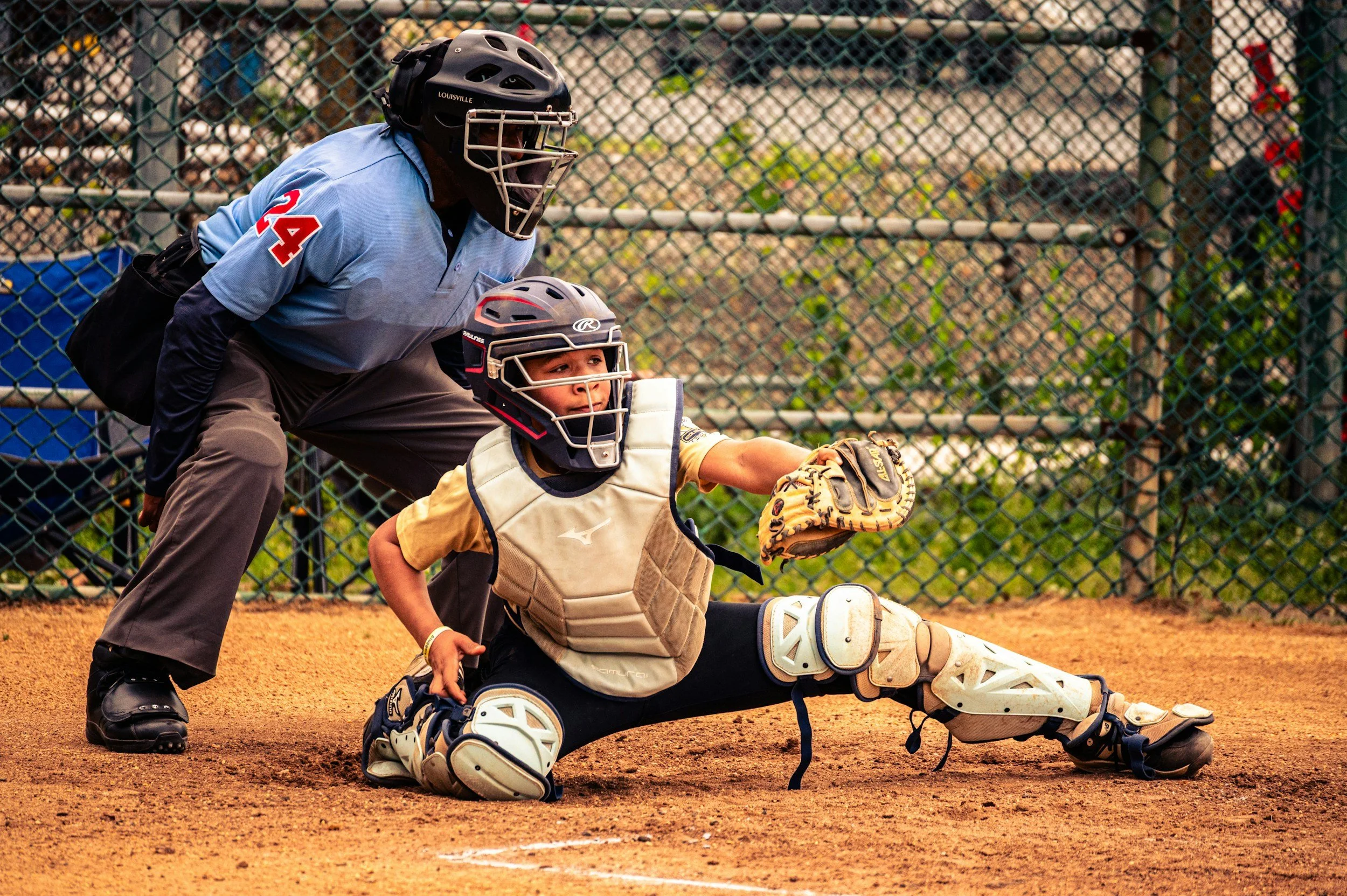
Think about the best athlete you ever played with. Now think about who got them there. Not the college coach or the trainer. The Little League coach who stayed late. The umpire behind the plate on a Tuesday night in May, working his third game of the week for not much money. Nobody becomes who they became without those people.
Some former athletes go on to coach at the top. Deion Sanders coached high school football in Texas before Jackson State and Colorado. Tom Izzo's first head coaching job after playing at Northern Michigan was one season at Ishpeming High School. Dawn Staley took the Temple job while she was still playing in the WNBA. Not everyone is going to be them. But the game doesn't need everyone to be them. It needs a lot of people to be the Little League coach and the umpire behind the plate.
Right now, we're not asking. We spend years pushing athletes toward careers off the field, and we never tell them the game needs them back. That's the real shortage.
The numbers, straight
Participation is booming. A record 8,415,684 students played high school sports in 2025-26, according to the NFHS. Every one of those games needs officials, and most of those kids started out with volunteer coaches.
The officiating headcount is actually recovering. That's the good news, and I want to be honest about it. The NFHS reports that registrations in the 36 states it tracks reached 237,811 in 2024-25, up 8% from before the pandemic, after an estimated loss of 50,000 officials during COVID.
But look at who's doing the work. In the 2023 National Officiating Survey, the largest ever with 35,813 officials responding, the average age was 56.68, up from 53.29 in 2017. For the first time, the average climbed over 50 in every sport. And 79% said they had taken more assignments because of the shortage. That isn't a healthy workforce. It's a veteran crew covering for a generation nobody asked.
Coaching looks the same. The number of youth coaches has grown, but according to the Aspen Institute, 40% of youth head coaches in 2023 were 55 or older, up from about 14% to 20% for most of the previous decade. And 80% of coaches say their community needs more coaches.
A shortage is a headcount problem. What we have is a pipeline problem. We keep refilling the bucket with the same people and hoping it holds.
Where the pipeline breaks
Here's the leak. Almost every kid who plays stops playing. The NCAA estimates that of the more than eight million students playing high school sports, about 550,000 will compete at an NCAA school. In football and basketball, about 1% of college players get drafted.
And we don't prepare them for that. In the NCAA's 2026 career planning report, 57% of athletes in Division I men's sports said going pro or making an Olympic team was at least somewhat likely. So the message they grow up with is: make it, or move on. When the career ends, they get pointed at a job, an internship, a LinkedIn profile. Nobody says: you know this game better than almost anyone alive, and it needs you.
There's a story underneath that, too. Somewhere along the way, coaching and officiating started to look like what you do if you didn't make it. The has-been with the whistle. That story is backwards. Brad Stevens quit a job at Eli Lilly to volunteer in Butler's basketball office. He didn't fall into coaching. He walked away from a career to get back to the game.
The people who stay already told us why
We don't have to guess what brings people in. In the Aspen Institute's National Coach Survey of more than 10,000 youth coaches, 79% said wanting to stay involved in sport was a big reason they started, and 78% pointed to playing sports as a kid. Only 14% said money. And 48% said they started because someone asked them.
Read that again. Nearly half of youth coaches are coaching because somebody asked. The easiest recruiting tool we have is the one we almost never use on the people most qualified to say yes.
Officials tell a similar story. Hancock and colleagues surveyed 514 officials and found they started for intrinsic reasons and "for the sport." They stayed for intrinsic and social reasons. They quit over lack of respect, too much stress and lack of recognition. When Stacy Warner and colleagues interviewed referees who quit, the reasons included problematic social interactions, poor training and mentoring, and a "Lack of Referee Community." They found that off-court factors mattered more than what happened on the court.
Think about what that means. Officials stay when they have a crew. They leave when they're alone. Former athletes just lost a team and are looking for one. The fit is almost too obvious.
The people who run officiating already see it. Debbie Williamson, who has coordinated women's basketball officials for several NCAA Division I conferences, started Player-to-Ref camps to move former college players into officiating. Her reasoning: "They have a great feel for the game. They know the game in a way that someone who has never played doesn't." In 2025, NASO and the Division III Commissioners Association launched Stay In the Game, which pairs athletes with officiating mentors "as athletes' playing days start to wind down." That's the right idea. It should be the norm, not a pilot.
Why it matters for kids
This isn't just about keeping games on the schedule. Coaches decide whether kids come back. In a classic youth baseball study, 26% of kids whose coaches weren't trained dropped out the next season, compared with 5% of kids whose coaches were. In Aspen's 2026 national survey of youth, "bad coaching" was the top complaint among current players, and one of the top two among kids who quit.
Put a former college athlete in front of a team of ten-year-olds and you get someone who knows the game, knows what good coaching felt like and knows what bad coaching cost them. That's who we should want on the field.
The sport needs them as much as they need it
I've written before about what former athletes lose when they walk away: the team, the identity, the reason to show up. The research on leaving sport and on changing your role in it says the same thing. Groups protect you. Giving back helps you.
This is the other side of that deal. The sport needs its former athletes to survive, just as much as the athletes need the sport. Every official working their third game of the week and every volunteer coach who quit after one season is a sign we've been ignoring the most qualified people we have.
How to fix the pipeline
None of this is expensive. It's mostly about asking at the right time.
Ask during the final season. Every senior athlete should be asked, before their last game, to coach or officiate one youth game. Not after the banquet. Before.
Recruit crews, not individuals. Officials quit when they're alone. Bring former teammates in together, pair them with a mentor and give them a crew from day one.
Change the story. Coaching and officiating aren't what you do if you didn't make it. The best players you've ever seen made it because somebody coached them and somebody officiated their games. Athletic departments, state associations and coaches should say that out loud.
Make it a real path. Colleges already run career programs. Add officiating certification, youth coaching courses and an introduction to local associations to the same menu.
Where we fit
This is why Next Game at The NOVA Foundation exists. We connect former athletes of any age with opportunities to coach, officiate, play and hang out in their city. Volunteers join through each partner organization's own volunteer and safeguarding process, and the social side comes naturally after the games.
If you're a former athlete, join the Next Game community. If you run a league, a youth program or an officials' association and need people who know the game, email us at partner@thenovafoundation.org.
Sources
Anderson-Butcher, D., & Bates, S. (2022). National Coach Survey: Final report. Aspen Institute. https://www.aspeninstitute.org/wp-content/uploads/2025/07/11.14.22-Anderson-Butcher-Bates.-2022.-National-Coach-Survey-Final-Report_.pdf
Aspen Institute Project Play. (2024). State of Play 2024: Coaching trends. https://projectplay.org/state-of-play-2024-coaching-trends
Aspen Institute Project Play. (2026). Aspen Institute National Survey of Youth and Sports: 15 key findings. https://projectplay.org/news/aspen-institute-national-survey-of-youth-and-sports-15-key-findings
Barnett, N. P., Smoll, F. L., & Smith, R. E. (1992). Effects of enhancing coach-athlete relationships on youth sport attrition. The Sport Psychologist, 6(2), 111-127. https://doi.org/10.1123/tsp.6.2.111
Hancock, D. J., Dawson, D. J., & Auger, D. (2015). Why ref? Understanding sport officials' motivations to begin, continue, and quit. Movement & Sport Sciences, 87, 31-39. https://doi.org/10.1051/sm/2014018
NASO. (2025). DIII & NASO launch new "Stay In the Game" officiating recruitment program aimed at student-athletes. https://www.naso.org/stay-in-the-game/
NCAA. (2026). NCAA GOALS study: Student-athlete career planning and development. https://ncaaorg.s3.amazonaws.com/research/goals/2026RES_GOALS-CareerPlanningReport.pdf
NCAA. (n.d.). Probability of competing beyond high school. https://www.ncaa.org/sports/2013/12/17/probability-of-competing-beyond-high-school.aspx
NFHS / Referee Magazine. (2023). NASO survey indicates concerns with sportsmanship, shortage of officials. https://www.nfhs.org/stories/naso-survey-indicates-concerns-with-sportsmanship-shortage-of-officials
NFHS. (2026). Led by girls flag football and girls wrestling, high school sports participation increases for fifth consecutive year. https://nfhs.org/stories/led-by-girls-flag-football-and-girls-wrestling-high-school-sports-participation-increases-for-fifth-consecutive-year
Tittrington, S. (2021). Transition game. Referee. https://www.referee.com/transition-game/
Vance, M. (2025, July 24). Officiating numbers are on the rise. Lake Oswego Review. https://lakeoswegoreview.com/2025/07/24/lor-officials/ (quoting NFHS 2024-25 officials registration data)
Warner, S., Tingle, J. K., & Kellett, P. (2013). Officiating attrition: The experiences of former referees via a sport development lens. Journal of Sport Management, 27(4), 316-328. https://doi.org/10.1123/jsm.27.4.316
Stop Telling Former Athletes to Move On
The usual advice after your career ends is to move on. The research says the smarter move is to stay in sport in a new role.
When your career ends, the advice comes fast. Move on. Find your next thing. Figure out who you are without sport. It's well meant, and some of it is right. But the "leave sport behind" part is where the research disagrees. It's gotten more specific in the last few years, too.
The identity isn't the problem
Start with the thing everyone worries about: athletic identity. Most of the transition research treats it as the risk factor, and in my last post I got into why losing it hurts. But when Erin Reifsteck, Diane Gill and Jeffrey Labban surveyed former NCAA Division I athletes, both exercise identity and athletic identity were positively related to physical activity. Former athletes who still saw themselves as athletes tended to be more active.
To be fair, not every study likes a big athletic identity. Patricia Lally found that athletes who shrank theirs before retiring had an easier landing, and a study of German, Lithuanian and Russian athletes found that high athletic identity meant more problems adapting. So which is it?
The newer research answers that pretty clearly. It isn't how much you identify with being an athlete. It's whether that identity has somewhere to go. Zhang and colleagues followed recently retired elite athletes for a year. The ones who adjusted found what the researchers call identity continuity, through "strengthening connection with past group identity" and "forming new identities related to previous ones." A 2024 study of 21 retired elite athletes described the same move as "actively repurposing identity." And a 2026 study of 240 adults playing alumni football found athletic identity alone had no direct link to wellbeing. It mattered through social connectedness.
The identity isn't the problem. Having nowhere to put it is.
Where you put it matters
Rochelle Eime and colleagues reviewed the research on the psychological and social benefits of sport for adults. The benefits reported most often were wellbeing and less distress and stress, and club-based or team-based sport seemed to be associated with better outcomes than individual activities, because of the social side. It was a small pool of studies, but the biggest dataset we have points the same way. When Chekroud and colleagues looked at 1.2 million Americans, every kind of exercise was associated with fewer bad mental health days, and "the largest associations were seen for popular team sports," at 22.3% lower.
That matters for us, because the default after you retire is the solo version: a gym membership, a treadmill, headphones in. And a lot of former athletes don't even keep that up. A study at a Division I university found that alumni athletes exercised far less than current athletes and were no more active than people who never played at all. The rec league is doing something the treadmill isn't. It gives you a reason to show up that isn't willpower.
Giving back
Then there's giving back. Caroline Jenkinson and colleagues reviewed the studies on volunteering and health. Cohort studies showed volunteering had favorable effects on depression, life satisfaction and wellbeing, though not on physical health, and a meta-analysis of five cohort studies found volunteers had a lower risk of mortality. I'll be straight about the caveat: that evidence is observational, and the experimental studies didn't confirm it.
But the retirement research gives a reason to take it seriously. In a study of 171 retirees, Niklas Steffens and colleagues found that people with more group memberships were more satisfied with retirement and healthier, and the path ran "through greater provision, but not receipt, of social support to others." Giving support did the work, not getting it. Retired athletes say the same thing. In interviews with former British Olympic-sport athletes, providing support to others "was just as effective as receiving support."
Former athletes already seem to know this. In the Aspen Institute's National Coach Survey of more than 10,000 youth coaches, 79% said wanting to stay involved in sport was a big reason they started coaching, and 78% pointed to playing sports as a kid. Only 14% said money. And ask anyone who has coached a youth team whether they got something out of it.
Underneath all of it is people
Julianne Holt-Lunstad, Timothy Smith and Bradley Layton pooled 148 studies and found "a 50% increased likelihood of survival for participants with stronger social relationships." You spent years inside a built-in community of teammates and coaches. Walking away from all of it can mean giving up one of the few things the research says protects you.
That doesn't mean every athlete should stay close to the game right away. Some step away because sport hurt them, and distance can be the right call. The point is that leaving sport behind shouldn't be the default advice.
Better advice
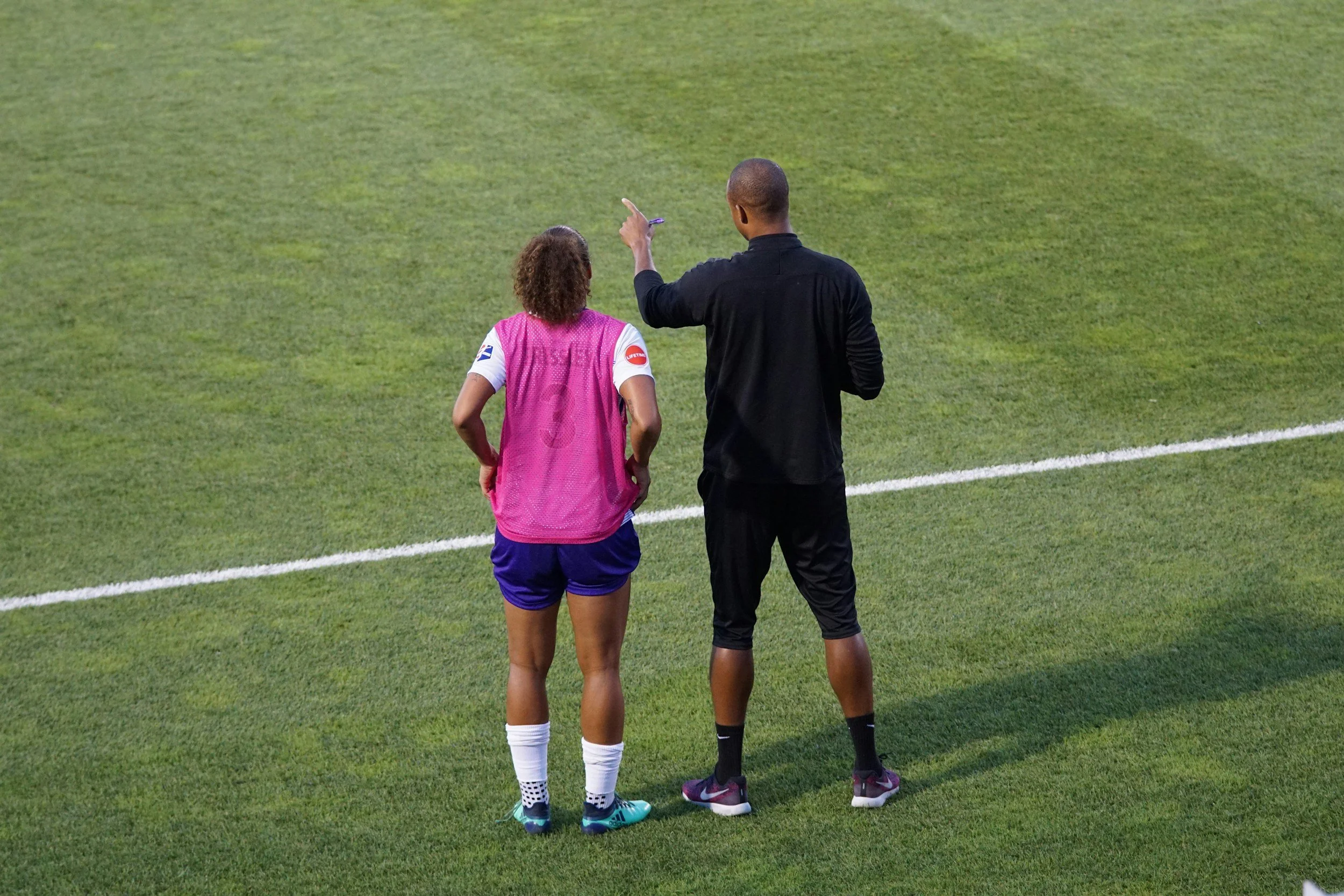
So here's better advice. Don't leave sport. Change your role in it. Coach a youth team. Officiate. Run a clinic. Join a rec league with people who played. Take a board seat at the club you grew up in. Every one of those keeps the identity, the team and a reason to show up, and none of them asks you to pretend you're still competing.
And sport needs you to do it. The average age of the officials who answered the biggest national officiating survey is nearly 57, and 80% of youth coaches say their community needs more coaches. More on that in The Answer to the Officiating Shortage Just Played Its Last Game.
Where we fit
That's what Next Game at The NOVA Foundation is built for. We connect former athletes of any age with volunteer, playing and social opportunities in their city. Volunteers join through each partner organization's own volunteer process, and the hangouts come naturally after the games.
If you're a former athlete, join the Next Game community. If you run a league, a youth program or a parks department and need volunteers who know the game, email us at partner@thenovafoundation.org.
Sources
Alfermann, D., Stambulova, N., & Zemaityte, A. (2004). Reactions to sport career termination: A cross-national comparison of German, Lithuanian, and Russian athletes. Psychology of Sport and Exercise, 5(1), 61-75. https://doi.org/10.1016/S1469-0292(02)00050-X
Anderson-Butcher, D., & Bates, S. (2022). National Coach Survey: Final report. Aspen Institute. https://www.aspeninstitute.org/wp-content/uploads/2025/07/11.14.22-Anderson-Butcher-Bates.-2022.-National-Coach-Survey-Final-Report_.pdf
Brown, C. J., Webb, T. L., Robinson, M. A., & Cotgreave, R. (2018). Athletes' experiences of social support during their transition out of elite sport: An interpretive phenomenological analysis. Psychology of Sport and Exercise, 36, 71-80. https://doi.org/10.1016/j.psychsport.2018.01.003
Chekroud, S. R., Gueorguieva, R., Zheutlin, A. B., Paulus, M., Krumholz, H. M., Krystal, J. H., & Chekroud, A. M. (2018). Association between physical exercise and mental health in 1.2 million individuals in the USA between 2011 and 2015: A cross-sectional study. The Lancet Psychiatry, 5(9), 739-746. https://doi.org/10.1016/S2215-0366(18)30227-X
Eime, R. M., Young, J. A., Harvey, J. T., Charity, M. J., & Payne, W. R. (2013). A systematic review of the psychological and social benefits of participation in sport for adults: Informing development of a conceptual model of health through sport. International Journal of Behavioral Nutrition and Physical Activity, 10, 135. https://doi.org/10.1186/1479-5868-10-135
Haslam, C., et al. (2024). "I'm more than my sport": Exploring the dynamic processes of identity change in athletic retirement. Psychology of Sport and Exercise, 73, 102640. https://doi.org/10.1016/j.psychsport.2024.102640
Holt-Lunstad, J., Smith, T. B., & Layton, J. B. (2010). Social relationships and mortality risk: A meta-analytic review. PLOS Medicine, 7(7), e1000316. https://doi.org/10.1371/journal.pmed.1000316
Jenkinson, C. E., et al. (2013). Is volunteering a public health intervention? A systematic review and meta-analysis of the health and survival of volunteers. BMC Public Health, 13, 773. https://doi.org/10.1186/1471-2458-13-773
Lally, P. (2007). Identity and athletic retirement: A prospective study. Psychology of Sport and Exercise, 8(1), 85-99. https://doi.org/10.1016/j.psychsport.2006.03.003
Reifsteck, E. J., Gill, D. L., & Labban, J. D. (2016). "Athletes" and "exercisers": Understanding identity, motivation, and physical activity participation in former college athletes. Sport, Exercise, and Performance Psychology, 5(1), 25-38. https://doi.org/10.1037/spy0000046
Sorenson, S. C., Romano, R., Azen, S. P., Schroeder, E. T., & Salem, G. J. (2015). Life span exercise among elite intercollegiate student athletes. Sports Health, 7(1), 80-86. https://doi.org/10.1177/1941738114534813
Steffens, N. K., Jetten, J., Haslam, C., Cruwys, T., & Haslam, S. A. (2016). Multiple social identities enhance health post-retirement because they are a basis for giving social support. Frontiers in Psychology, 7, 1519. https://doi.org/10.3389/fpsyg.2016.01519
Wang, J. (2026). The impact of alumni football on adult mental wellbeing: A serial mediation analysis of athletic identity and social connectedness. Frontiers in Psychology, 17, 1780689. https://doi.org/10.3389/fpsyg.2026.1780689
Zhang, Y., Haslam, S. A., Haslam, C., & Steffens, N. K. (2025). A badge, a part of my history and also a root: A longitudinal qualitative exploration of the social identity model of identity change in retired elite athletes. British Journal of Social Psychology, 64(3), e70005. https://doi.org/10.1111/bjso.70005